Votes on the Map: How American Steem Stakeholders Are Quietly Deciding Who Runs the Blockchain
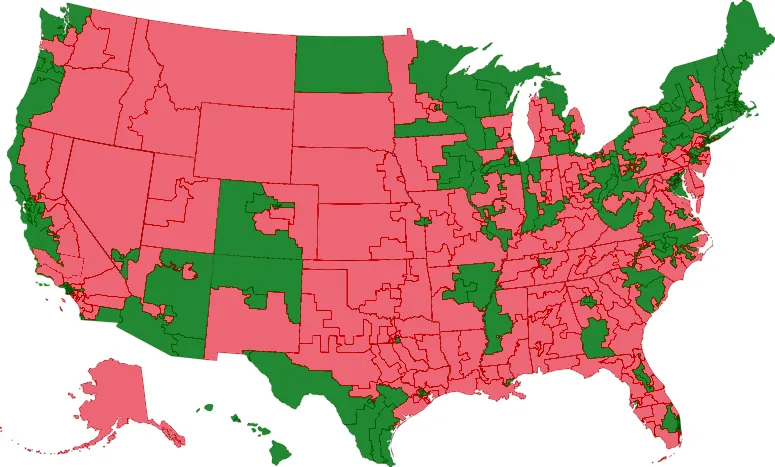
Photo: Bluestring, CC BY 3.0, via Wikimedia Commons
Most conversations about Steem focus on posts, curation rewards, and token prices. But underneath all of that sits a quieter, slower-moving drama that arguably matters more: witness elections. These are the votes that determine who validates transactions, proposes protocol changes, and essentially keeps the whole machine running. And if you start mapping where those votes are coming from, something interesting emerges — American stakeholders, particularly those clustered in a handful of states and metro areas, are wielding influence that reaches far beyond their local communities.
This isn't a conspiracy. It's just what decentralized governance looks like when you put it on a map.
What Witnesses Actually Do (And Why It Matters)
Before getting into the geography, a quick refresher. Witnesses on Steem are elected nodes — essentially the servers that confirm blocks and maintain the chain. The top 20 witnesses hold the most sway, determining things like feed prices and software upgrades. Stakeholders vote for witnesses using their Steem Power, meaning bigger wallets carry bigger votes.
On paper, this sounds clean and meritocratic. In practice, it means that whoever holds concentrated Steem Power has outsized influence over who runs the infrastructure. And when you start looking at where that Steem Power lives geographically, you notice some clear patterns.
The Coastal Concentration Problem
Data from community surveys, Discord participation records, and on-chain activity signals a familiar story: Steem's most active American stakeholders tend to cluster in tech-adjacent metro areas. The Bay Area, Seattle, Austin, New York, and the broader Boston corridor show up repeatedly as hotbeds of engaged, high-SP users. This mirrors broader trends in crypto adoption across the US, where proximity to tech culture and higher average incomes correlate with earlier and deeper blockchain participation.
What this means for witness elections is that candidates who build relationships in these communities — showing up in the right Discord servers, speaking at virtual meetups, posting consistently in spaces where high-SP holders hang out — have a structural advantage. It's not that Midwestern or Southern Steem users don't vote. They do. But the density of large stakeholders in coastal tech hubs means those communities punch above their weight when witness tallies are counted.
Voting Blocs and the Informal Alliances Behind Them
Here's where it gets genuinely interesting. Witness voting on Steem doesn't happen in a vacuum. There are informal alliances — groups of stakeholders who coordinate their votes, not through any formal mechanism, but through shared community spaces. Think of it as political caucusing, blockchain style.
Several US-based Steem communities have developed what amount to voting blocs without ever calling them that. A niche photography community based largely in the Pacific Northwest might collectively back a witness who's known for supporting creative content initiatives. A DeFi-adjacent group with heavy Texas representation might favor witnesses with a more hands-off, low-intervention philosophy. These aren't hardcoded agreements — they're the natural result of people who share values and geography talking to each other and arriving at similar conclusions.
The implication is significant: witness elections are, at least partly, a reflection of which offline and semi-offline communities have managed to translate their social cohesion into on-chain coordination.
The Flyover State Factor
It would be easy to write off the middle of the country as a non-factor in Steem governance, but that's an oversimplification. While large-SP concentration skews coastal, there are meaningful pockets of engaged Steem users in places like Ohio, Michigan, Colorado, and the Carolinas. These communities tend to be smaller but often more tightly knit, and they're increasingly aware of how witness voting works.
Some of the more civically engaged corners of the Steem ecosystem have been making deliberate efforts to educate users in these regions about the mechanics of witness voting. The logic is straightforward: if you want governance to be genuinely decentralized, you need participation spread across the map, not concentrated in a few zip codes. A handful of community organizers have started hosting informal "governance literacy" sessions in Discord and Telegram, walking newer users through how to cast witness votes and why it matters.
Whether this grassroots education effort moves the needle is still an open question, but it points to a growing awareness that geographic diversity in governance isn't just a nice-to-have — it's a structural necessity for the long-term legitimacy of the chain.
Time Zones as a Governance Variable
Here's a wrinkle that doesn't get discussed enough: time zones affect governance participation in subtle but real ways. Witness-related discussions often happen in real time — in community calls, live AMAs, and fast-moving Discord threads. Users on the East Coast are working with a different clock than those in Mountain or Pacific time, which affects who shows up to key conversations and who's left catching up on the replay.
For American voters specifically, this creates a quiet advantage for Eastern Time Zone participants, who are more likely to be present during peak global activity hours when European and Asian stakeholders are also online. It's a small thing, but in a governance system where relationships and visibility matter, showing up consistently in real time carries weight.
What This Means for the Future of Steem's Consensus Layer
Zoom out and a few things become clear. First, Steem's witness election system is genuinely decentralized in its mechanics, but social and geographic forces create real-world clustering effects that complicate the pure-democracy narrative. Second, American stakeholders — particularly those in high-SP coastal communities — currently hold significant informal influence over who reaches the top 20. Third, there's a growing counter-movement pushing for broader geographic participation, which could meaningfully diversify the governance landscape over the next few years.
For everyday US Steem users, the takeaway is practical: your witness votes matter more than you probably think. If you've got Steem Power sitting idle and you've never touched your witness vote settings, you're essentially abstaining from the election that determines who runs the infrastructure your earnings depend on.
The map of Steem governance is still being drawn. The question is whether American stakeholders across all regions — not just the usual tech-hub suspects — will show up to help draw it.
Want to see where Steem's most active governance participants are located? Steem World Map is tracking community clusters and on-chain activity across the US. Drop a pin and make your presence known.