Off the Ledger: The Hidden Influence Networks That Blockchain Data Will Never Show You

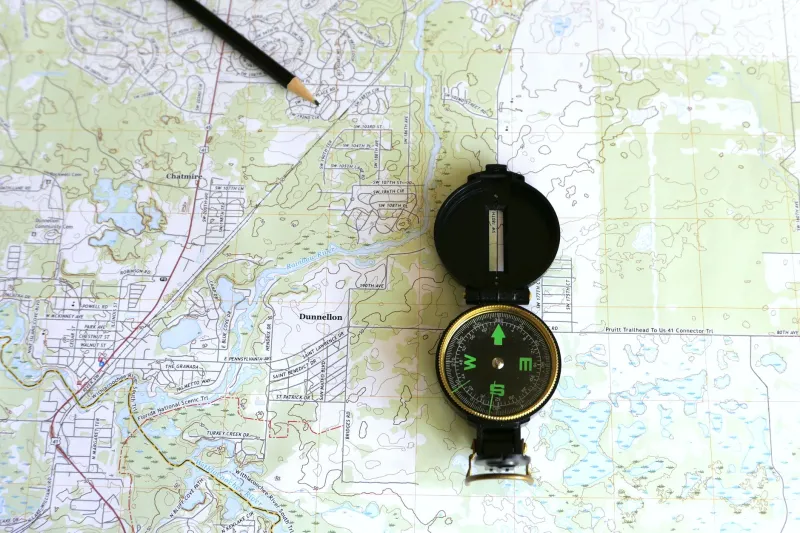
Open up any Steem analytics tool and you'll get a pretty clean picture—wallet balances, Steem Power delegations, vote weights, post payouts. Numbers laid out in neat rows, easy to sort, easy to rank. It looks like a map. It feels like a map. But if you've spent any real time in this ecosystem, you already know: the territory is a lot messier than the map suggests.
The truth is that some of the most genuinely influential creators on Steem don't show up where you'd expect. Their wallets aren't overflowing. Their follower counts aren't staggering. But mention their username in the right Discord server, and the room changes. Drop their content into a niche community thread, and people actually stop scrolling. That kind of influence doesn't live on the blockchain. And that's exactly the problem.
What On-Chain Metrics Are Actually Measuring
Let's be real about what standard Steem data captures. Voting power tells you how much stake someone holds and how they're deploying it. Post payouts tell you what the algorithm—and the whales behind it—decided to reward on a given day. Follower counts are a snapshot of who clicked a button at some point in the past, which may or may not reflect who's actually reading anything.
None of that measures trust. None of it measures the creator whose weekly post a tight-knit community of 200 people genuinely waits for. None of it captures the US-based photographer who's become the de facto curator for an entire genre, whose recommendations get acted on even when her votes don't move the payout needle much. The blockchain records transactions. It doesn't record relationships.
And relationships, it turns out, are where influence actually lives.
The Architecture of Hidden Influence
Think about how real-world influence spreads in any creative community—music, food, outdoor culture, whatever. It rarely flows from the person with the biggest platform. It flows from the person everyone trusts. The one who shows up consistently, who engages genuinely, who has a perspective that feels earned rather than performed.
Steem's off-chain influence networks work the same way. They're built across Discord servers, Telegram groups, Twitter threads, and plain old comment sections. A creator in Austin might have a modest Steem Power stack but run a Discord community of passionate food bloggers who treat her opinion as gospel. A wildlife photographer in Montana might post three times a week to a modest audience on Steem, but his content gets shared across subreddits and Instagram accounts that funnel new users onto the platform regularly.
Neither of these people looks impressive on a blockchain explorer. Both of them are doing serious work.
Case Study: The Connector vs. The Whale
Here's a pattern that shows up again and again when you dig into US Steem communities. You'll find a well-staked account—call them the Whale—whose voting activity dominates the analytics. High Steem Power, visible payouts, easy to find in any ranking tool. Then, one or two degrees removed, you'll find someone else—call them the Connector—who doesn't rank anywhere near as high by conventional metrics.
But look at what the Connector is actually doing. Their posts consistently draw genuine comments, not bot engagement. When they highlight another creator, that creator sees real traffic. When they raise a concern about community direction, people listen and respond. Their influence isn't stored in a wallet. It's stored in the social fabric of the community itself.
The Whale moves money. The Connector moves people. Both matter—but only one of them shows up on your dashboard.
Why the Algorithm Eventually Catches Up (and Why That's Your Window)
Here's the interesting thing about hidden influence: it doesn't stay hidden forever. Communities grow. Word spreads. The creator who was quietly building trust in a niche corner of Steem eventually reaches a tipping point where the broader platform notices. Suddenly, votes start rolling in. Payouts climb. The analytics tools catch up to what the community already knew six months ago.
For anyone paying attention, that gap between actual influence and measured influence is an opportunity. If you can identify creators who are genuinely moving their communities—before the algorithm does—you're in a position to build early relationships, offer meaningful support, and be part of a community while it's still small enough that your participation actually matters.
The question is how to spot them.
A Framework for Finding Undervalued Creators
Forget the leaderboards for a minute. Here's a more useful set of questions to ask when you're trying to map real influence on Steem:
Are people actually responding? Not just upvoting—commenting. Genuine back-and-forth in the comments section is one of the clearest signals that a creator is building real connection rather than just broadcasting.
Does their content travel? Check whether their posts get referenced, shared, or linked to in other communities. A post that sparks conversation in three different Discord servers is doing something a high-payout post that nobody discusses isn't.
Do other creators cite them? When you're reading through Steem posts in a given niche, notice who gets name-dropped. Creators who become reference points for their peers have built a kind of intellectual authority that doesn't show up in any wallet.
Are they consistent without being calculated? There's a particular quality to creators who post because they genuinely have something to say, versus those who are optimizing for payout windows and trending tags. The former tend to build deeper loyalty over time.
What happens off-chain? Spend some time in the Discord servers and Telegram groups adjacent to Steem niches you care about. Notice whose name comes up. Notice who people ask for when they have questions. That's your map.
The Cartography Problem Is Actually an Opportunity
Steem's analytics infrastructure is genuinely impressive in a lot of ways. The blockchain is transparent, the data is accessible, and there are solid third-party tools that make sense of it. But every map has edges. Every measurement system has blind spots.
The blind spot here is social capital—the accumulated trust, credibility, and relational equity that some creators have built through years of showing up, engaging honestly, and contributing real value to their communities. That kind of capital doesn't tokenize cleanly. It doesn't fit in a column on a spreadsheet.
But it's real. And in a platform ecosystem where algorithmic rewards can shift overnight, it might actually be the most durable form of influence there is. The creators who've built it aren't going anywhere when the payouts fluctuate. Their communities stay because the relationship is the point, not the reward.
So the next time you're looking at a Steem analytics dashboard and trying to figure out who actually matters in this ecosystem, remember: you're looking at a partial map. The most interesting terrain is still off the ledger.