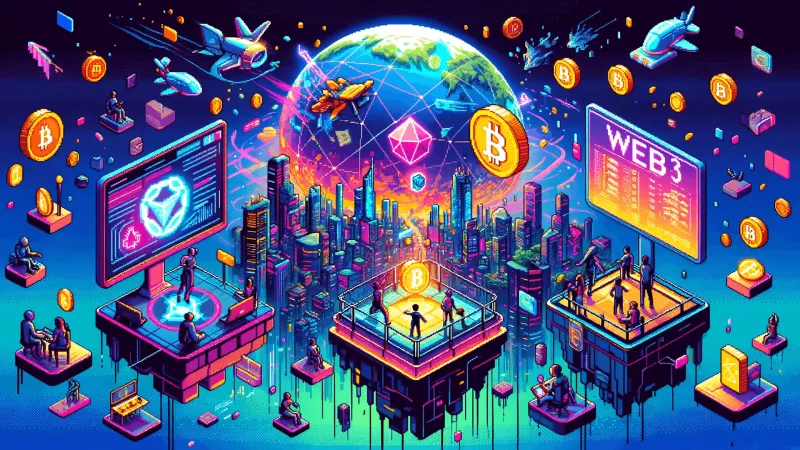
From Coast to Coast: The US Creators Planting Their Flags on the Steem Blockchain
Photo: Llewellynlloyd25, CC BY-SA 4.0, via Wikimedia Commons
There's a moment every content creator knows — the one where the platform changes its algorithm, slashes your reach, or simply decides your work isn't worth promoting anymore. For a growing wave of American creators, that moment became a turning point. Instead of chasing the next trending platform, they started building somewhere no single corporation could pull the rug out from under them.
Welcome to Steem. And welcome to the map.
At Steem World Map, we exist to chart exactly this kind of movement — the human geography of decentralized content creation. So we went looking for the clusters, the communities, and the creators who are quietly building independent audiences, block by block, post by post, across the US.
The Pacific Northwest: Writers Who Got Tired of Waiting for Permission
If you zoom into the Pacific Northwest on our community map, you'll notice a surprising density of long-form writers and independent journalists anchoring themselves to Steem. Seattle and Portland have always had a strong DIY publishing culture, and it turns out that spirit translates naturally to blockchain-based content.
Take the kind of creator profile that keeps popping up in this region: independent essayists and investigative bloggers who spent years building newsletters and Medium followings, only to watch monetization dry up or editorial independence get quietly squeezed. On Steem, they're finding something different — a direct line between their writing and their earnings, mediated by community curation rather than advertiser relationships.
"The thing that got me," one Portland-based food and culture writer explained in a community thread, "was realizing my best work was making someone else's platform more valuable while I was getting table scraps. On Steem, when my content performs, I actually see it."
The upvote-and-curation model isn't perfect, but for writers used to the unpredictability of ad revenue, it offers something genuinely refreshing: legibility. You can see who's supporting your work and why.
Austin and the Texas Creative Belt: Musicians Mapping New Revenue Streams
Head south and east on the map, and the creative profile shifts. Texas — Austin especially — is showing up as a notable hub for musicians and audio producers experimenting with Steem as a complement to their existing income streams.
This makes intuitive sense. The music industry has been brutal for independent artists for two decades. Streaming royalties are famously thin, social media reach requires constant algorithm-gaming, and live income is volatile. Steem doesn't replace any of those revenue streams, but it adds one that's genuinely different: a community that pays you directly for sharing your process.
Musicians in this space aren't just posting finished tracks. They're sharing studio session notes, gear reviews, music theory breakdowns, and behind-the-scenes content about touring life. The Steem ecosystem rewards educational and community-building content, which means artists who engage authentically tend to build loyal followings that translate into real earnings.
One Austin-based producer noted that his Steem presence had become his most reliable "slow money" — not a windfall, but a consistent trickle that compounds as his reputation in the community grows. "It's like royalties, but from people who actually know your name," he said.
New York and the Northeast: Educators and Explainers Finding Their People
Up in the Northeast, the Steem activity clustering around New York, Boston, and Philadelphia skews heavily toward educators, researchers, and the kind of person who genuinely enjoys writing 2,000-word explainers about complex topics.
This is a community that has always struggled to monetize its work on traditional platforms. YouTube rewards entertainment over education in most algorithm cycles. Substack works for established names but is brutal for new entrants. Steem's community-driven curation has a notable soft spot for quality educational content, particularly in the STEM fields, personal finance, and — naturally — blockchain and cryptocurrency education itself.
There's also something geographically fitting about the Northeast's Steem presence. These are cities with deep traditions of public intellectual culture, from Boston's university ecosystem to New York's media landscape. The creators here aren't abandoning those traditions — they're extending them onto a decentralized substrate.
The Southeast and Midwest: Hyperlocal Creators Filling the Gap
Some of the most interesting dots on our map are scattered across smaller cities in the Southeast and Midwest — places where local journalism has been gutted by consolidation and where community storytelling has lost its institutional home.
Creators in cities like Chattanooga, Columbus, and Des Moines are using Steem to do something genuinely valuable: hyperlocal content that national platforms have no financial incentive to support. Local history threads, neighborhood food guides, coverage of city council decisions that affect real people — this is content that doesn't scale for Silicon Valley, but it matters enormously to the communities it serves.
On Steem, that content can find its audience and earn accordingly. It's a small but meaningful proof of concept for what decentralized media could look like at the community level.
Why Geographic Clusters Form (and Why It Matters)
One pattern we keep seeing at Steem World Map is that Steem communities don't form randomly — they cluster around existing creative infrastructure. Cities with strong independent arts scenes, university towns with active research communities, tech hubs with blockchain-curious professionals: these are the places where Steem adoption tends to accelerate.
This clustering matters because it suggests that Steem adoption isn't just an individual choice — it's a community phenomenon. Creators bring in other creators. Local Steem meetups, Discord servers organized by city, and collaborative posting projects all reinforce geographic identity within the decentralized ecosystem.
The map, in other words, is filling in.
What the Migration Actually Looks Like Day to Day
It's worth being honest about what this migration involves. Most creators on Steem aren't quitting their day jobs immediately. The platform rewards consistency and community engagement over viral moments, which means the earning curve is gradual.
What creators consistently report, though, is a qualitative shift in how their work feels. Without algorithmic pressure to produce content optimized for engagement metrics, many find themselves writing, creating, and sharing more authentically. The audience they build tends to be smaller but significantly more engaged than what they had on mainstream platforms.
For a writer, musician, artist, or educator who's spent years chasing numbers that don't translate to real relationships or reliable income, that trade-off often feels like a good one.
Adding Your Pin to the Map
If you're a US creator who's already building on Steem, you should be on our map. If you're considering the migration, the communities we've described above are real, active, and genuinely welcoming to new participants.
The decentralized world is being built one creator at a time, one block at a time. The map is yours to shape.