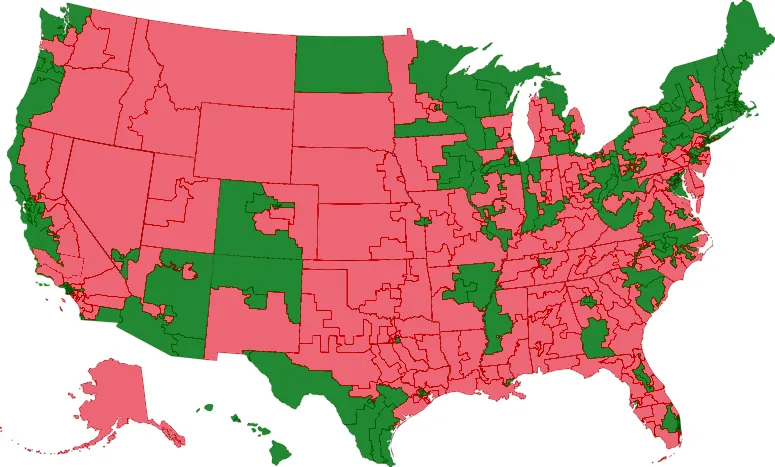
Whale Country: The Surprising Map of Where Steem's Biggest Money Actually Lives
Photo: Gerard van Schagen, Public domain, via Wikimedia Commons
Decentralization is one of blockchain's favorite buzzwords. The whole pitch is that no single person, company, or place controls the network. Power is supposed to be spread out — across wallets, time zones, and continents. But when you actually start mapping where Steem's largest stakeholders are concentrated, that clean narrative gets a little complicated.
Spoiler: the whales aren't as evenly distributed as the whitepaper would have you believe.
What the On-Chain Data Actually Shows
Steem's blockchain is public, which means anyone willing to do the legwork can start drawing some conclusions about where the big money sits. Wallet activity patterns, posting times, witness vote behavior, and delegation trails all leave geographic fingerprints — not perfectly precise, but telling enough.
When researchers and community analysts have cross-referenced account activity with known identities, disclosed locations, and IP-adjacent metadata from associated platforms, a few clusters start standing out. Significant Steem Power tends to concentrate in a handful of tech-forward metro areas — think the usual suspects: San Francisco Bay Area, New York City, Seattle, Austin, and a smattering of mid-Atlantic corridors.
This isn't random. These are the same cities that produced the early crypto adopters, the blockchain conference regulars, and the venture-adjacent crowd that got into Steem back when it was making headlines in 2016 and 2017. Early movers accumulated tokens when prices were low and Steem Power was cheap to stack. Geography, in this case, is really a proxy for timing — and timing, in crypto, is almost everything.
Why Concentration in a Few Zip Codes Is Actually a Governance Problem
Here's where it gets interesting for anyone who cares about how Steem actually runs.
Steem's governance model is stake-weighted. That means the more Steem Power you hold, the more influence you have — over witness elections, over which proposals get funded, over whose content the algorithm surfaces. In theory, that's just how the protocol works. In practice, when a significant chunk of that stake is geographically clustered, it starts to behave less like a decentralized network and more like a regional interest group.
Consider witness voting. Witnesses are the block producers who keep the Steem blockchain running, and they're elected by stakeholders. If a disproportionate share of voting power sits in, say, two or three US metro areas, the witnesses who get elected tend to be the ones those communities already know, trust, and have met at meetups. That's not necessarily corrupt — it's just human. But it does mean that a creator in rural Montana or a community builder in the Midwest is working with a structurally different set of social capital than someone embedded in a San Francisco crypto circle.
The map shapes the money, even on a blockchain.
The Compounding Effect on New Creators
For newer Steem creators trying to get traction, geographic concentration among whales creates a subtle but real headwind.
Curation — the act of upvoting content — is one of the primary ways value flows on Steem. Whales who curate posts they enjoy can dramatically lift a creator's earnings. But curation isn't purely algorithmic. It's social. People tend to upvote creators they've heard of, communities they're connected to, and content that resonates with their own frame of reference.
When whale attention is geographically and socially concentrated, it tends to circulate within existing networks. A creator who's already embedded in the right Discord servers, who showed up at SteemFest, who gets retweeted by the right accounts — they have a meaningful advantage over someone building an audience from scratch in a city where the local Steem community is basically just them.
This isn't a knock on individual curators. It's a structural observation. And it matters because Steem's value proposition to creators is supposed to be meritocratic: great content gets rewarded. The reality is a bit more networked than that.
Does Any of This Mean Steem Is Broken?
Not necessarily. Geographic concentration is a feature of pretty much every financial ecosystem — stock ownership in the US, for example, is famously concentrated along the coasts and among older demographics. The fact that Steem has similar patterns doesn't make it uniquely flawed. It makes it human.
What it does mean is that the "decentralized" label deserves some honest scrutiny. A blockchain where transaction validation is distributed globally but economic power clusters in a handful of American tech hubs is decentralized in a technical sense — and considerably less so in a practical one.
The good news is that Steem's geography isn't frozen. Token distribution changes over time. New communities grow. Delegation markets, community tokens, and second-layer platforms have all created pathways for creators outside the whale cluster to build real economic footing without needing a cosign from a San Francisco power user.
What Creators Can Actually Do With This Information
Knowing that whale wealth concentrates geographically isn't just an academic observation — it's actionable intelligence for anyone trying to build on Steem.
Find your niche community. Steem's community tokens and tribe platforms have created micro-economies that operate somewhat independently of top-level whale dynamics. Platforms like SteemLeo, Travelfeed, or sport and gaming communities have their own curator bases and their own internal economies. Breaking through in a specific niche is often more achievable than competing for attention in the main feed.
Build cross-platform visibility. Creators who develop audiences on Twitter, YouTube, or Instagram and then funnel that attention to their Steem content don't need to rely exclusively on on-chain curation networks. External visibility changes your leverage.
Engage where the whales actually are. If you know that significant curation power congregates in certain Discord servers, Reddit threads, or Twitter communities, showing up there — genuinely, with value — is a smarter play than posting into the void and hoping the algorithm finds you.
Think long term about Steem Power accumulation. The creators who've managed to build real stake over time aren't just earning from curation — they're gradually joining the stakeholder class themselves. Powering up consistently, even in small amounts, compounds over time.
The Map Is Always Changing
One of the most interesting things about tracking Steem's geographic distribution over time is watching how it shifts. Early concentration in the US and parts of East Asia has gradually diversified as Steem communities have taken root in Latin America, Eastern Europe, and Southeast Asia. The whale tier remains disproportionately concentrated, but the broader creator base has genuinely spread across the globe.
That's the tension at the heart of Steem's decentralization story: the network is geographically diverse at the participation level and still pretty concentrated at the capital level. Closing that gap — or at least understanding it clearly — is the work that the community is still in the middle of doing.
For creators mapping their own path through the Steem ecosystem, understanding the physical infrastructure behind the apparent decentralization isn't cynical. It's just good strategy.