Clock In, Cash Out: How Your US Time Zone Is Secretly Shaping Your Steem Earnings
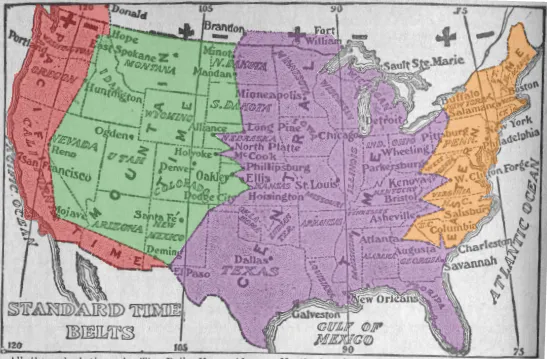
Photo: OwenBlacker, Public domain, via Wikimedia Commons
There's a version of Steem strategy that talks endlessly about content quality, curation trails, and community engagement. All of that matters. But there's a variable sitting right on your phone's home screen that most creators completely ignore: the time.
Not just any time — your time, relative to the rest of the blockchain. The Steem ecosystem doesn't exist in a vacuum, and neither does its reward pool. Voting power, engagement windows, and curator attention all follow rhythmic patterns that map almost perfectly onto US time zones. Understanding those patterns isn't just a scheduling trick. It's a genuine earnings lever that creators on both coasts and everywhere in between can start pulling today.
Why Timing Actually Moves the Needle on Steem
Here's the quick mechanics refresher for anyone who needs it: Steem's reward system gives posts a seven-day window to accumulate upvotes, but the bulk of curation rewards flow in the first 24 to 48 hours. High-value curators — think large stakeholders, curation guilds, and active community leads — tend to sweep through fresh content during their own peak activity hours. Miss that window, and your post might still earn something, but you've left real STEEM on the table.
What makes this interesting from a geographic angle is that the US alone spans four major time zones — Eastern, Central, Mountain, and Pacific — and each one creates a slightly different relationship with the global Steem audience. Layer in the fact that a significant chunk of Steem's most active curators and community builders are US-based, and suddenly where you live starts to feel a lot more relevant to your earnings strategy.
Eastern Time: The Early Bird Gets the Curation
Creators in the Eastern time zone — think New York, Atlanta, Boston, Miami — sit in an interesting sweet spot. When they're posting during their morning hours (7–9 AM ET), they're catching the tail end of overnight European activity while also being first in line for the US curation wave that kicks off as the East Coast work day starts.
The flip side? Evening posting from Eastern creators (8–11 PM ET) tends to land in a quieter window, after most US curators have logged off but before Asian markets pick up steam. If you're in EST and you've been posting at night because that's when you have time, you might be consistently missing your highest-value audience.
The data pattern here suggests Eastern creators who can manage a mid-morning post — or even a lunch-hour drop — tend to see stronger early engagement than those posting after dinner.
Central Time: The Overlooked Advantage
Central time creators in cities like Chicago, Dallas, Minneapolis, and New Orleans have what might be the most underappreciated scheduling position on the map. Posting between 8 AM and 10 AM CT means hitting the East Coast audience mid-morning when curation energy is high, while also getting indexed early enough to catch the afternoon West Coast scroll.
There's also something worth noting about Central time and weekend behavior. Steem engagement tends to spike on Saturday and Sunday mornings as US users catch up on their feeds. A Central time creator posting at 9 AM on a Saturday is essentially threading the needle between two coastal audiences simultaneously. That's not nothing.
Mountain Time: Playing the Long Game
Creators in Denver, Phoenix, Salt Lake City, and Albuquerque are working with a time zone that honestly doesn't get enough credit in these conversations. Mountain time sits two hours behind the East Coast and one hour ahead of the Pacific, which creates a natural buffer that can actually work in a creator's favor.
Posting at 9 AM MT means your content hits Eastern feeds during the mid-morning engagement peak, while Pacific curators are still waking up and working through their morning coffee. That staggered exposure can extend your first-hour engagement window — instead of a sharp spike, you get a longer ramp that keeps your post surfacing in active feeds for a larger chunk of the day.
Mountain time creators who post consistently in the 8–10 AM local window often report more stable early-day engagement compared to creators in zones where the audience hits all at once and then disappears.
Pacific Time: The West Coast Hustle
Los Angeles, Seattle, San Francisco, Portland — Pacific time creators face the steepest uphill climb when it comes to catching the East Coast curation wave. By the time most West Coast users are posting their morning content, Eastern curators have already been active for three hours.
That said, Pacific creators aren't without options. The evening hours in PST (7–10 PM) actually align with a second-wind engagement period when East Coast users are winding down with their phones and casually browsing feeds. A well-timed evening post from a Pacific creator can catch that late-ET scroll while also being fresh for any overnight international curation activity.
Another angle worth exploring for Pacific creators: weekend mornings. Posting at 7 or 8 AM PT on a Saturday or Sunday still catches a broad US audience that's in weekend browse mode across all time zones, and the competition for fresh content in those hours tends to be lower.
Building Your Personal Timing Map
The honest truth is that there's no single magic posting time that works for every creator in every niche. A travel photographer's audience behaves differently than a crypto analyst's community, even if they're both posting from Chicago.
What you can do is start treating your post timing like a variable worth testing. Pick two or three time slots within the strategic windows for your zone, rotate through them over a few weeks, and track your early-hour engagement and final payout numbers. Steem's blockchain data is public and transparent — tools like SteemWorld and Steemit's own analytics give you real numbers to work with, not guesswork.
The map metaphor feels especially apt here. Just like the Steem World Map itself plots where creators are building and earning across the globe, your personal earnings map has geographic coordinates baked right into it. Your time zone isn't a limitation — it's a data point. And data points, when you know how to read them, have a way of turning into strategy.
Start treating your clock like part of your content toolkit. The reward pool doesn't care what time it is. But the curators holding the keys to it absolutely do.