Follow the Tokens: What Steem's Blockchain Data Actually Says About Who's Getting Paid
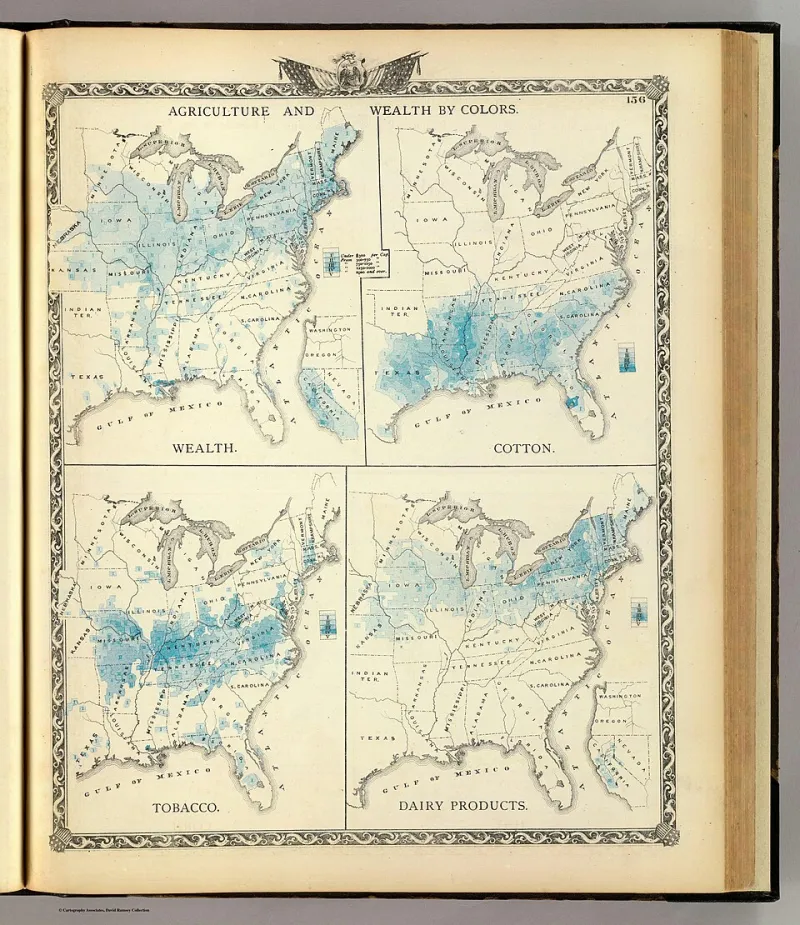
Photo: Union Atlas Co. Warner & Beers, Public domain, via Wikimedia Commons
The Ledger Doesn't Lie
One of the foundational promises of blockchain technology is transparency. Every transaction, every reward payout, every delegation — it's all written permanently to a public ledger that anyone can read. For a platform like Steem, where content creators are actively earning cryptocurrency for their work, that transparency creates something rare: a complete, auditable record of who's making what.
Most social platforms keep that kind of data locked in proprietary vaults. Steem broadcasts it to the world. So what does it actually say?
We spent time digging through publicly available on-chain data, cross-referencing reward pool distributions, delegation patterns, and account activity metrics to build a clearer picture of how earnings flow through the Steem ecosystem. The results are illuminating — and they complicate the simple narrative that blockchain-based platforms are inherently more equitable than their Web2 counterparts.
The Shape of the Earnings Curve
Anyone who's spent time in economics has encountered the Pareto principle — the idea that roughly 80% of outcomes tend to concentrate among 20% of participants. In practice, on Steem, the curve is steeper than that.
On-chain data consistently shows that a small cluster of high-stake accounts — those with significant Steem Power, the platform's influence-weighted token — captures a disproportionate share of curation rewards and, indirectly, shapes which authors rise to visibility. This isn't a bug in the code. It's a predictable outcome of a stake-weighted voting system. But it's worth naming clearly: the structural architecture of Steem's reward mechanism tends to amplify existing advantages.
For a creator just starting out in, say, Columbus, Ohio, with no existing Steem Power and no network of high-stake curators following their work, the early earnings curve can feel discouraging. Average post payouts for new accounts without active curation support often land in the range of a few cents to a couple of dollars — not nothing, but not the kind of number that drives behavioral change.
Contrast that with established accounts holding significant delegated Steem Power, where curation alone — voting on other people's content — can generate meaningful passive returns. The asymmetry is visible in the data.
Author vs. Curator: Two Very Different Economic Realities
One of the most interesting patterns that emerges from on-chain analysis is the divergence between how authors and curators accumulate rewards over time.
Authors depend on discovery. Their earnings are fundamentally tied to whether high-influence accounts find and upvote their work within the reward window. That creates a kind of lottery dynamic, particularly for newer creators — consistent quality doesn't guarantee consistent earnings if the right curators aren't watching.
Curators, by contrast, operate in a more predictable environment. Curation rewards on Steem are distributed to voters based on the timing and weight of their votes relative to the post's eventual payout. Sophisticated curators — or, increasingly, automated voting bots following high-performing accounts — can optimize this process systematically. The result is a curation economy that rewards scale and automation over human discovery.
This dynamic has real implications for the creator demographics that thrive on Steem. Developers and technically sophisticated users who can build or deploy voting automation tools have a structural advantage over writers, visual artists, or video creators who are simply trying to make good content and get paid fairly for it.
Where the Concentration Is Growing
Zooming out to look at delegation patterns — where large Steem Power holders assign their influence to other accounts — reveals another layer of the wealth distribution picture. Delegation markets have emerged where Steem Power is essentially rented out for a return, creating financial relationships that mirror traditional capital lending dynamics.
For creators, this means that access to curation visibility is, in some cases, purchasable. Accounts that lease delegated Steem Power can amplify their own votes, improving their curation returns or boosting their own posts' visibility. For creators with capital to deploy, this is a tool. For creators without it, it's another barrier.
The geographic dimension here is worth noting for US readers specifically. Steem's global user base means that purchasing power parity plays a real role in who can afford to participate in delegation markets. A creator in rural Mississippi and a creator in San Francisco have very different economic contexts when evaluating whether leasing Steem Power makes financial sense. The blockchain doesn't see those differences — but they shape participation patterns in ways the raw data reflects.
The Developer Archetype: A Separate Track Entirely
Developers building on the Steem ecosystem occupy a distinct economic lane. Rather than competing for reward pool payouts, many developer-focused accounts earn through worker proposals, direct community funding, or by building tools that generate token revenue. The on-chain footprint of a successful Steem developer looks almost nothing like that of a successful Steem author.
This separation matters because it means the "creator" category on Steem is actually several overlapping but distinct economic communities, each with different earning mechanics and different structural advantages. Lumping them together in aggregate analysis obscures important nuance.
For example, developers who build curation tools benefit indirectly from the curation economy they're enabling. That creates an interesting alignment of incentives — but also a potential conflict, since the most profitable curation automation can crowd out the organic discovery that makes author earnings possible in the first place.
What the Map Reveals About Power
Steem World Map exists to chart participation and value creation across this ecosystem. When you apply that geographic and demographic lens to the earnings data, a few things come into focus.
First, influence on Steem is highly networked. The accounts that consistently drive high payouts for authors aren't randomly distributed — they tend to cluster in communities, follow each other's voting patterns, and reinforce existing networks. Breaking into those networks as an outsider, whether you're a new creator in Phoenix or a developer in Portland, requires deliberate relationship-building that the data doesn't capture but that insiders understand is essential.
Second, the gap between the top tier and the median is real and growing. On-chain data from 2023 into 2024 shows increasing concentration of Steem Power in fewer accounts, even as the number of active posting accounts fluctuates. That's a consolidation trend worth watching.
Third — and this is genuinely encouraging — the emergence of second-layer communities and niche token ecosystems is creating alternative economic tracks that partially sidestep the main reward pool dynamics. Creators who find the right community tokens and build genuine audiences within those ecosystems are carving out more equitable earning environments for themselves.
Transparency as a Starting Point
The fact that all of this is visible in public data is itself significant. Unlike Instagram's opaque algorithm or YouTube's black-box monetization policies, Steem's earnings mechanics are auditable by anyone with the curiosity to look. That transparency doesn't automatically create equity — as the data shows clearly — but it does make the dynamics legible.
For creators considering whether Steem is worth their time, that legibility is valuable. You can study the ecosystem before committing to it. You can see where the money flows, who the key curators are, and what kinds of content and communities have historically generated real returns.
The map is drawn in public. You just have to know how to read it.